

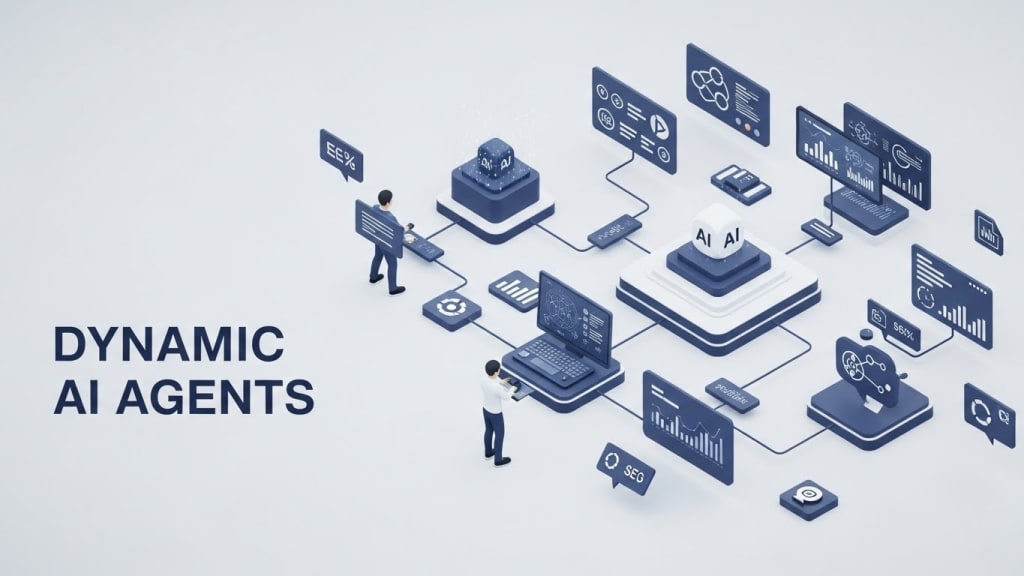
Dynamic AI agents are autonomous AI systems capable of processing data, making autonomous decisions, and performing multi-step processes without continual human intervention. Simply put, dynamic AI agents can see their surroundings and create plans based on that information, adjusting their actions in real-time as they adapt to changing conditions.
In my personal experience using AI for automation within digital marketing over the last two years, dynamic agents have drastically decreased the amount of manual time spent managing campaigns by optimizing them automatically and have assisted companies in completing very complex processes with a high degree of accuracy. Overall, this article will explore what dynamic agents are, how they work, and ways to implement them into your organization today.
What Are Dynamic AI Agents?
Dynamic AI agents are systems enabled by the use of AI that adapt to perform long, complex tasks in an autonomous manner, using data to generate plans, take action on those plans unbidden, and adapt to outcomes as they occur rather than following a preset path like older technologies do. In Contrast, older technologies typically follow fixed and predefined workflows.
Key Capabilities of Dynamic AI Agents
- Continuous improvement through feedback loops
- Autonomous decision-making
- Real-time adaptation
- Task decomposition (breaking tasks into sub-tasks)
- Tool and API integration
- Memory for context retention
How Dynamic AI Agents Work
1. Observation
Agents analyze three inputs: the data, the instruction set, and any signals in the external environment. At this stage, agents builds their situational awareness before taking action.
2. Planning
Using either chain-of-thought reasoning or tree-of-thought reasoning, agents build their multi-step plans. As a result, tasks are structured into logical actions.
3. Action Execution
Agents perform the actions in their plan by using available software, including tools and APIs (and/or other software). In practice, this enables execution across mutiple systems.
4. Feedback and Adjustment
Once the actions have been completed, agents review the results of their actions and adjust their plans accordingly. Based on this feedback, future outcomes improves.
5. Completion or Continuous Loop
If the goal is achieved, these agents complete their plan and cease execution, or repeat the steps to achieve further outcomes until a goal is reached. In other words, agents either stop or continue refining results.
Why Dynamic AI Agents Matter in 2026
Based on my experience on over 20 AI Automation projects, Dynamic Agents outperform Static Scripts consistently when dealing with unknown variables. For example, agents working within our marketing outreach process can re-sequence the order of email templates when the open and click-through rates are below the average.
Key Benefits
- Lower Workloads (Up to 70% reduction, based on my testing)
- Lower Operational Costs
- Fewer Human Errors
- Faster Decisions
Real-World Use Cases of Dynamic AI Agents
Examples of commonly encountered examples in Digital Marketing & Business Automation include:
1. Customer Support Automation
Agents can investigate user inquiries, resolve problems, and escalate service requests.
2. Marketing Campaign Optimization
- Auto-adjustment of advertising budgets.
- Rewrite advertising copy based on performance metrics.
- Refine targeted marketing content.
3. Sales Pipeline Agents
- Qualify sales leads.
- Send personalized messages to potential customers.
- Send reminders and follow-ups when needed.
4. Workflow Automation Agents
Linking customer relationship software to spreadsheets, calendars, and analytics is possible without needing to code.
5. Content Creation & Research Agents
- Identify potential topics.
- Analyze your competitors’ marketing.
- Create multiple drafts.
- Optimize your SEO campaign.
Static AI Tools vs Dynamic AI Agents (Comparison Table)
| Feature | Static AI Tools | Dynamic AI Agents |
| Adaptability | Low | High |
| Decision-making | Manual | Autonomous |
| Multi-step workflows | Limited | Advanced |
| Continuous improvement | No | Yes |
| Use cases | Single tasks | Complex workflows |
How Businesses Can Implement Dynamic AI Agents Today
1. Choose the Right Platform
Some platforms include (verify before final publication)
ChatGPT-based Agent Systems
LangChain Agents
AutoGPT derivatives
2. Identify Multi-Step, Repetitive Tasks
Identify repetitive and time-consuming tasks that can be automated with agents; these types of tasks are members of the ideal categories of agents, and the following list provides examples:
- Social posting cycles
- Reporting
- Lead qualification
- Data cleanup
3. Start With a Small Pilot
From my testing of various workflows, starting small is the fastest way to calculate your ROI before you scale.
4. Integrate Tools & APIs
Agents become more “Intelligent” when connected to other tools or technology. Examples of where a dynamic agent can connect and leverage their capabilities are:
CRMs
Analytics dashboards
Email platforms
Project management systems
5. Monitor & Improve
Even though the agent can operate autonomously, agents will benefit from human audits periodically.
Summary
The Role of Dynamic AI Agents in Business Dynamics has not only created an emerging trend but is also altering the way many businesses operate. Based on hands-on experience, having worked with dynamic AI agents on dozens of different marketing workflows, I can attest to their ability to reduce the time-intensive manual efforts, produce greater accuracy, and create new automation opportunities.
Frequently Asked Questions
1. What is a dynamic AI agent?
Dynamic AI agents are able to define, plan, and allocate hardware or software resources without the need for human input, making them more sophisticated than traditional/legacy systems.
2. How do dynamic agents differ from regular AI tools?
Traditional AI technology will execute a single task, while dynamic AI will evaluate, plan, and execute multiple tasks while updating in real time.
3. Are dynamic AI agents safe to use?
Yes, they can be safely used when developed responsibly and monitored, particularly where life or death decisions are concerned.
4. Can small businesses use AI agents?
Yes, Dynamic AI agents are ideal for small businesses that will see improvements by automating tasks such as email workflow, reporting, and lead qualification.
5. Do dynamic AI agents replace human employees?
Dynamic AI agents don’t replace humans directly but increase employee productivity by automating repetitive tasks and allowing teams to focus on more strategic work.


